
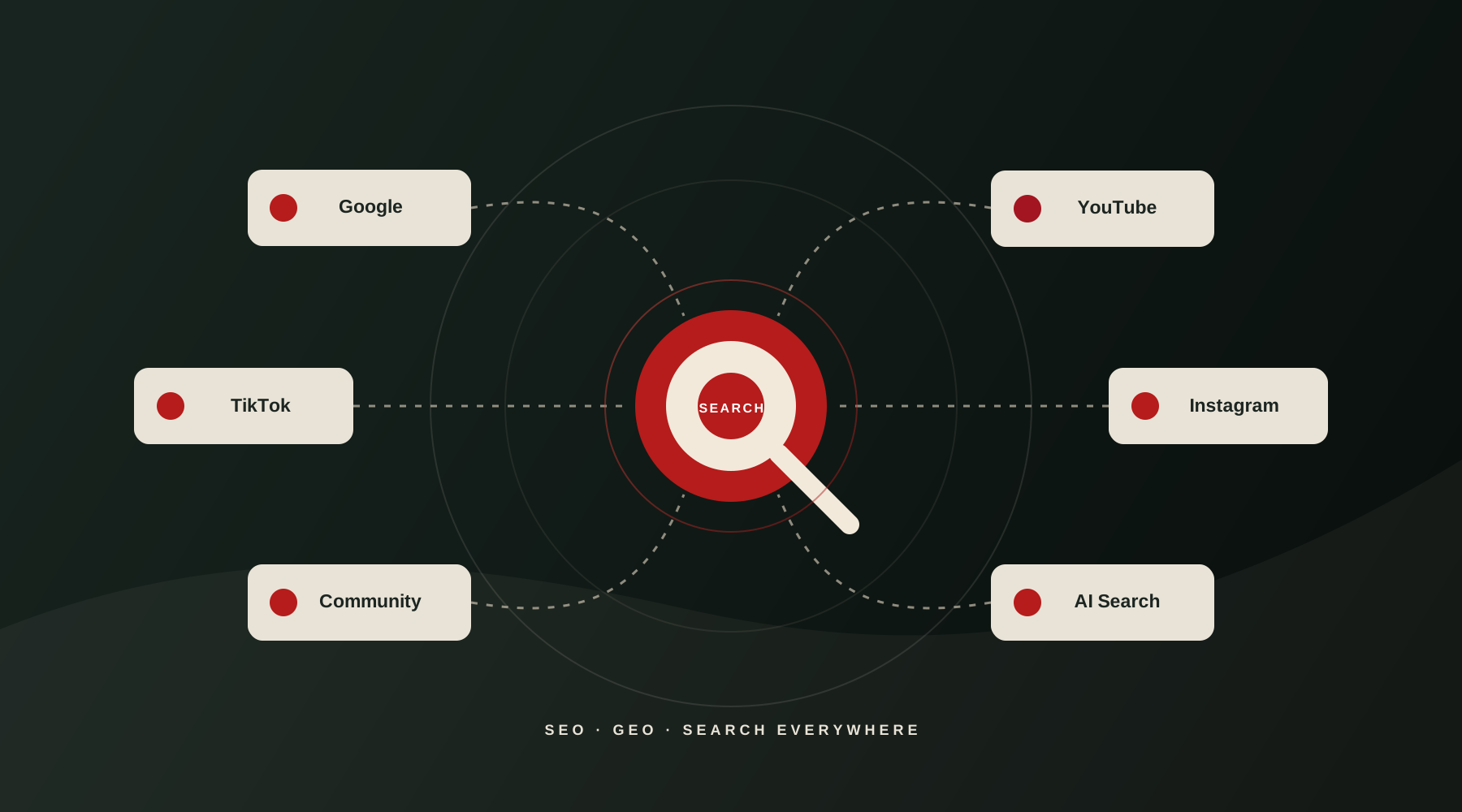
For a brand, “What rank do we rank on Google?” The question is still important. But it alone is no longer enough. People can search for a product on Google, watch it in use on YouTube, come across a quick review on TikTok, follow the brand on Instagram, or ask an AI tool to outline the options. Search behavior doesn't fit into a single box.
I do not read this change as the end of SEO. The approach I find more accurate is to consider search as the steps of discovery, evaluation and verification that people take on different platforms. “Search Everywhere Optimization” is a useful framework that explains this idea; But it is not a one-size-fits-all formula or a new SEO standard that replaces Google.
What do percentage claims about Google's share say?
The phrase "Google gets 27 percent of searches, other platforms get 73 percent", which is frequently encountered in 2026 SEO discussions, is noteworthy. However, it would not be correct to present this rate as the universal and definitive distribution of all searches on the internet. In such an calculation, it should be clearly defined which platforms, countries, search types and user behavior are included in the denominator.
For example, Rise at Seven's 2025/26 study; It compares high-search volume, predominantly commercial-intent generic words across five platforms – Google, YouTube, TikTok, Instagram and Pinterest – in the UK and US. Google's share in this sample was reported as 34.5 percent. Valuable multi-channel research; but it doesn't include Reddit, Amazon, and ChatGPT in the same metric, and it doesn't say it represents every type of search around the world.
In DataReportal's 2026 research data, it is reported that 80.3 percent of internet users over the age of 16 used a search platform in the last month. The same report found that search remains a powerful channel for brand discovery and research; However, he notes that user research behavior is also shifting to social platforms. My conclusion here is not “Google is over”: our target audience has multiple touch points in their decision journey, and the weight of these contacts varies by industry.
What does Search Everywhere propose to change?
A traditional SEO plan is often built around the website, technical infrastructure, search intent, and Google results. The Search Everywhere approach incorporates other areas where people search and discover into the same customer journey. The aim here is not to be in every medium at the same time; is to understand which question the potential customer asks and where when making a decision.
For example, a person looking for a hotel can search for locations and options on Google, want to see the atmosphere on Instagram, watch a room or experience video on YouTube, and read guest experiences on review platforms. A healthcare researcher can evaluate the doctor's expertise on the website, his explanation in the video, and his patient communication experience in the comments. These aren't strict platforming missions; Examples of behavior that may vary depending on sector, person and need.
Therefore, instead of assigning a "decision code" to each platform and assuming that users behave uniformly, it is necessary to examine the questions and data of your own target audience. Platforms can come into play at different moments of the same need; A user can use multiple platforms consecutively or simultaneously.
Express the same idea in different formats
Copying and pasting content from platform to platform does not provide omnichannel visibility. The main idea may remain common; The narrative, evidence, length and call should be rearranged according to the targeted medium.
| contact point | Possible need of the user | Content approach |
|---|---|---|
| Find the service, compare options and basic information | Unique service page, local information, clear titles and technically accessible website | |
| YouTube | To better understand the subject, see the process or expertise | In-depth explanation, demonstration, real example and video compatible with the title |
| TikTok/Instagram | Quick discovery, visual ideas and getting to know the brand's tone | Short video, clear first sentence, single main message and unique brand narrative |
| Comments / communities | Understanding others' experience and possible reservations | Real feedback, transparent response to questions and respect for participants' rules |
| Search with artificial intelligence | Summarizing multiple pieces of information and understanding options | Accurate, clear, consistent and visible web content |
This table is not a prescription; A starter set of questions to ask in a content meeting. Google's current guide also focuses on producing original and reliable content that benefits people, not on manipulating search rankings. Platform diversity doesn't take away from the basic SEO of the site or the need to actually help the user.
Visibility is not the same as validation from others
The content published by the brand in its own account provides an area of visibility that it can control. Independent reviews, community conversations, editorial sources and user experiences are evidence created by others about the brand. These are related, but not the same thing.
Mentioning a brand in other sources can be valuable in terms of trust and discovery. However, it would be too assertive to say that artificial intelligence systems only summarize “verification networks” or that they will never recommend a brand that is not mentioned somewhere. ChatGPT can search the web and add linked resources to its answers when needed; The way the systems work varies depending on the product and query. Therefore, the generalization that “AI models do not search” is not true. Technical and content details for Google's AI Overviews features In our Google AI Overviews guide, ChatGPT specific brand resources In our article on brand visibility in ChatGPT We consider.
The feasible goal is to ensure that the brand has a consistent, accurate and understandable digital footprint across different sources, rather than looking for tactics to fool artificial intelligence. Explain the service clearly on your website, demonstrably demonstrate expertise, provide comprehensive answers to questions, and manage real user feedback ethically. This issue is important for small budgets. In our GEO guide for small brands, the measurement approach when clicks decrease In our clickless marketing article We also consider.
To practically examine which questions your brand is missing in artificial intelligence answers My guide to AEO auditing and brand vulnerabilities you can read.
Prioritize instead of trying to catch up on every platform
Opening an account in every new medium and producing regular content can distract the focus, especially in small teams. First, identify the two or three most valuable channels in your customer journey. When choosing, consider the channel's impact on the business and the team's ability to sustain it, as well as reach.
You can adapt the RICE approach from the video for the content plan. A minor terminology correction is important here: In the common usage of RICE, E stands for “Effort”; It is not “ease” or convenience. It is possible to add convenience as a separate practical criterion, but this should not be presented as the classic RICE definition. Rate a content channel on a scale of 1–5 on these topics:
- Reach — Access: The likelihood of your target audience discovering you on this channel and the reach seen in your existing data.
- Impact — Effect: The channel's contribution to the qualified lead, appointment or sales journey.
- Confidence – Trust: How much your data and team experience support this expectation.
- Effort — Effort: Time, budget and production capacity required for regular and quality broadcasting. If the effort is high, the priority you allocate to the channel may decrease.
Do not use scores alone as a decision machine. Support it with customer conversations, Search Console, web analytics, platform insights, CRM records, and sales team feedback. To measure the impact of a channel, track not only views but also qualified visits, brand searches, forms, calls, messages and sales quality.
Workable starter plan for the first 30 days
- First week: Collect recent customer inquiries and reasons for lost sales; Find 10 topics your target audience is searching for.
- Second week: Check current visibility on website, Google, social media, video and comments areas; List key information inconsistencies to be corrected.
- Third week: Choose the three most important questions and prepare a web page or blog, short video and social sharing format for each. Adapt the text to the use of each platform.
- Fourth week: Look for qualified traffic and demand signs next to views. Maintain topics and formats that work; Try the weak ones again with a different introduction, evidence, or distribution.
One month may be short to prove the entire strategy; However, it is a first cycle sufficient to understand whether the production order has been established and which issues are of interest. From there, update the plan based on actual performance and business goals.
Result: Not a single ranking, but a coherent digital asset
It is necessary to think more broadly for SEO in 2026; But this should not turn into a rush to be visible on every platform. First understand how the customer researches. Then choose the channels where your brand will be most useful, produce appropriate content for each and measure its impact on the business result.
For me, this is the essence of the Search Everywhere approach: not abandoning Google, but not reducing visibility to just Google rankings. Good content is found in search, looks natural on the platform, answers a real question, and makes people's decisions easier.
Frequently asked questions
What is Search Everywhere Optimization?
It is a marketing approach that does not limit search behavior only to Google, but evaluates touch points such as YouTube, social platforms, communities and artificial intelligence-supported search together.
Is Google SEO unimportant anymore?
No. Google remains an important channel of discovery and research. But in some sectors and target audiences, social, video or marketplace searches can also contribute to the decision process.
Is it necessary to produce content on every platform?
No. Prioritize based on your target audience's behavior, the channel's contribution to your business goal, and your team's sustainable production capacity.
What does the E in the RICE model mean?
In the common RICE framework, E stands for Effort. Convenience is not a standard replacement for this model; can also be evaluated.

Akın Tığlı
Founder of Sosyal Zeplin Creative. He brings over 15 years of experience to SEO, GEO and digital strategy for healthcare and tourism brands.
Read moreResources and reading notes
- Neil Patel: The New Rules of SEO (2026) — The video that is the starting point of this article; The 27/73 percent ratio in the video is not conveyed as universal search distribution.
- Rise at Seven: Multi-Channel Search Report 2025/26 — Research examining general keywords with predominantly commercial intent across five platforms in the UK and US.
- DataReportal: Digital 2027 Global Overview Report — GWI data on search platform usage and brand research behavior of global internet users.
- Google Search Central: Useful, reliable and people-oriented content.
- OpenAI Help Center: Searching the web with ChatGPT.
- Intercom: RICE prioritization framework — Definition of Reach, Impact, Confidence and Effort.
Where should your brand start?
Share your website and priority. Let us define the scope together.