
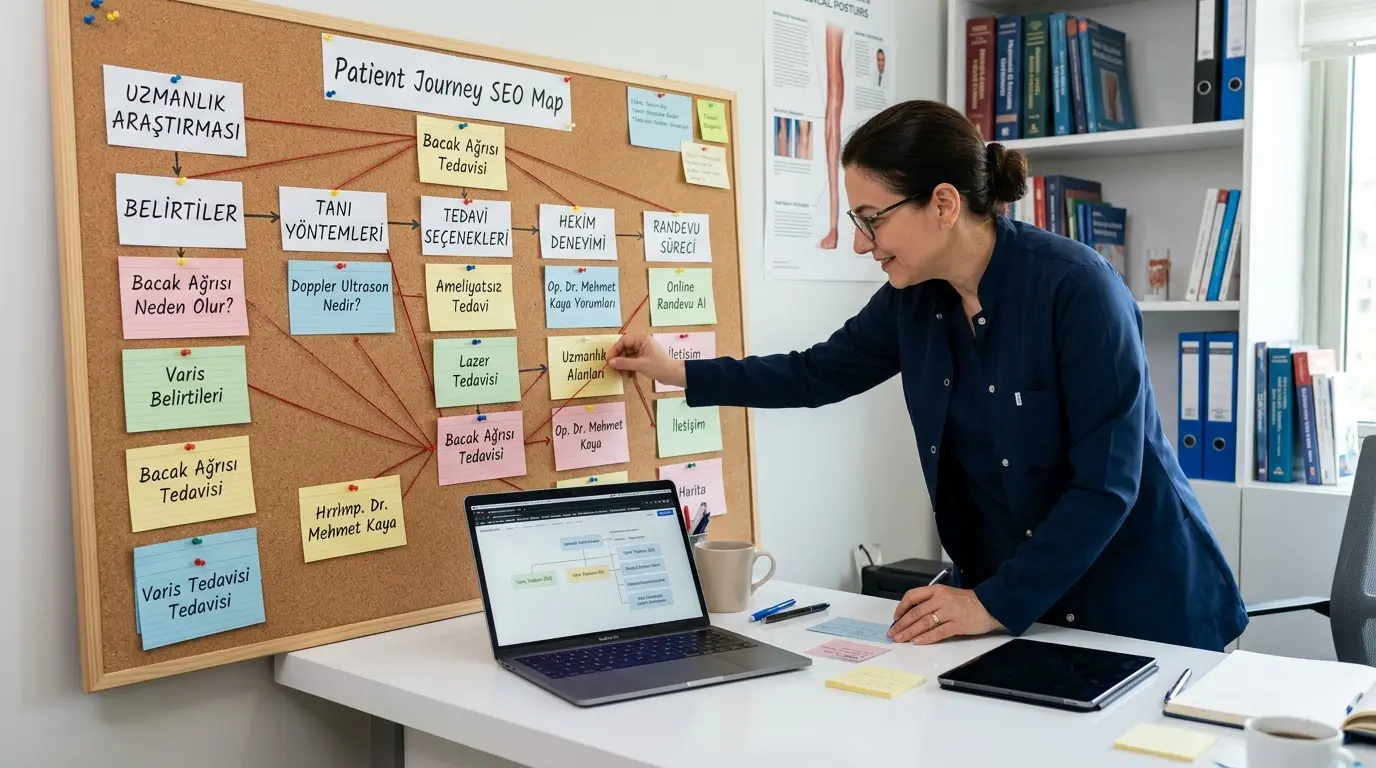
Patients do not research a medical specialty with just one query. They ask different questions, from symptoms and treatment options to a doctor’s experience and the appointment process. Connecting these questions through the right page architecture forms the foundation of topical authority in SEO for doctors.
This topic is part of a broader organic growth system. For a comprehensive approach covering technical infrastructure and topic clusters, explore ourSEO strategies for doctorsguide; you can also discover our360 Healthcare solutions, which bring SEO, content, websites, advertising and production together in one structure.
Why Are Standalone Articles Not Enough for Doctor SEO?
Blog posts published without connections between them interrupt the patient’s information journey and fail to clearly explain the scope of expertise to search engines. A strong content cluster brings the main specialty page, treatment pages and frequently asked patient questions together in one topic map.
Identify the Pillar Page
Every cluster should be centred on a specialty or treatment page for a service the doctor actually provides. This page should go beyond general information to clearly explain the assessment process, suitability criteria, possible approaches, the doctor’s experience and what to know before an appointment.
- Specialty or main treatment page
- Related condition and symptom pages
- Guides explaining diagnosis, treatment and follow-up
- Supporting content answering real patient questions
Group Patient Questions by Search Intent
Not every search on the same topic reflects the same need. Queries such as “what is it?” and “what causes it?” seek information, while “which doctor should I see?”, “how is it treated?” and searches mentioning a city move closer to specialist selection. The content plan should address these different intentions on separate pages without duplication.
Connect Symptoms, Conditions and Treatments Logically
Patients often search using the symptoms they experience rather than a medical diagnosis. Symptom content should explain possible causes in a balanced way and link to the relevant condition guide and, where necessary, treatment page without making a definitive diagnosis. This creates a natural, useful path through the website.
Use Internal Links for the Journey, Not Just Keywords
The purpose of an internal link is not to repeat the same phrase everywhere. It is to help readers move from their current stage to the next useful resource. Anchor text should clearly describe the destination page; pillar pages should link to supporting content, and supporting content should link back to the relevant pillar.
- From a symptom article to a condition guide
- From a condition guide to a treatment page
- From a treatment page to a doctor’s profile
- From all relevant content to the main doctor SEO service page
Make Medical Expertise and Review Visible
Trust in health content is not built through the right keywords alone. The author and medical reviewer, their specialty, publication and update dates, and a link to the doctor’s profile should be visible. Claims should be presented in simple, measured and verifiable language.
Create Clearly Answered Sections for SEO and GEO
Search engines and AI-based answer systems can more easily interpret clear sections that directly address a question. Definitions, short summaries, comparisons, step lists and original FAQs support readability as well as visibility. Each section should give a clear answer to one question.
Measure Topic Performance, Not the Number of Pages
A content cluster’s success should not be measured by the number of published articles. Query diversity in Search Console, pillar-page impressions and clicks, movement between related pages, and appointment and contact actions should be monitored together. Weak content should be updated or consolidated according to the results.
Conclusion: Turn Your Expertise into a Topic Map
Sustainable SEO for doctors brings expertise, patient questions and service pages together in a planned content architecture rather than producing random blog posts. Supported by appropriate internal links and trust signals, this structure strengthens organic search visibility and a better-qualified patient journey.
Where should your brand start?
Share your website and priority. Let us define the scope together.
Frequently Asked Questions
What is an SEO content cluster?+
It is a connected content structure that supports a main specialty or treatment page with related information about symptoms, conditions, processes and patient questions.
Should every patient question have a separate article?+
No. Create a new page when search intent and the answer are clearly different; combine similar questions in one comprehensive resource.
How many internal links should there be?+
There is no fixed number. Each link should take readers to a relevant and useful next step; avoid unnecessary and repetitive links.
Can older health content be added to a cluster?+
Yes. First check accuracy, freshness, search intent and page overlap, then connect the content to the appropriate pillar page.
Do content clusters support AI search?+
Clear topic relationships, expertise signals and directly answered questions may help search and AI systems understand content, but they do not guarantee visibility.